학습 개요
- 개개인마다 컴퓨터를 사용하는 목적이 다른 것과 같이 클라우드 또한 물리적 IT 리소스에 대한 상위 수준의 접근을 요구하는 사용자도 있을 수 있고, 가벼운 환경에서 자신이 원할 때만 특정 코드나 함수를 실행하는 것을 원하는 사용자도 있을 수 있음
- 다양한 사용자의 요구에 따라 여러 클라우드 서비스 모델이 개발 · 제공되고 있으며, 클라우드 상의 IT 리소스의 구성 요소와 사용자와 CSP 사이의 관리 영역은 클라우드 서비스를 나누는 기준이 됨
- 클라우드 서비스를 이용하는 대표적 3가지 모델과 최근 새롭게 등장하는 서비스 모델에 대해 학습함
- 대표적 배포 모델 4가지와 최근 대두되고 있는 멀티클라우드에 대해 알아봄
학습 목표
- 클라우드 이용 모델에 대해 설명할 수 있음
- 클라우드 서비스 모델의 종류와 특징을 설명할 수 있음
- 클라우드 배포 모델의 종류와 특징을 설명할 수 있음
강의록
클라우드 서비스 모델
클라우드 서비스 모델의 정의
- CSP가 제공하는 IT 리소스의 서비스 수준에 따른 구분
- NIST의 클라우드 서비스 모델 분류
- Service Models
- Software as a Service (SaaS)
- The capability provided to the consumer is to use the provider’s applications running on a cloud infrastructure².
- The applications are accessible from various client devices through either a thin client interface, such as a web browser (e.g., web-based email), or a program interface.
- The consumer does not manage or control the underlying cloud infrastructure including network, servers, operating systems, storage, or even individual application capabilities, with the possible exception of limited user-specific application configuration settings.
- Platform as a Service (PaaS)
- The capability provided to the consumer is to deploy onto the cloud infrastructure consumer-created or acquired applications created using programming languages, libraries, services, and tools supported by the provider.
- The consumer does not manage or control the underlying cloud infrastructure including network, servers, operating systems, or storage, but has control over the deployed applications and possibly configuration settings for the application-hosting environment.
- Infrastructure as a Service (IaaS)
- The capability provided to the consumer is to provision processing, storage, networks, and other fundamental computing resources where the consumer is able to deploy and run arbitrary software, which can include operating systems and applications.
- The consumer does not manage or control the underlying cloud infrastructure but has control over operating systems, storage, and deployed applications;
- and possibly limited control of select networking components (e.g., host firewalls).
- Software as a Service (SaaS)
소프트웨어 실행 스택
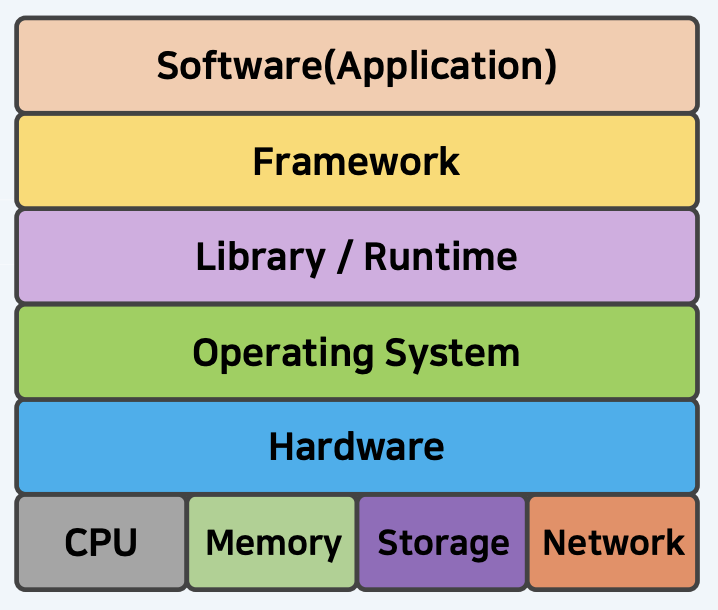
서비스 모델에 따른 관리 영역
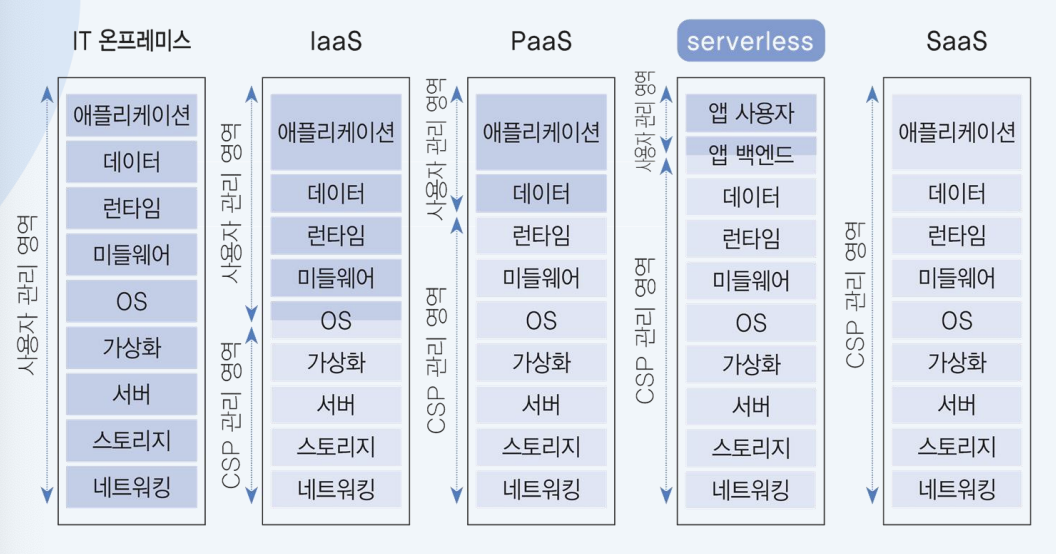
SaaS 모델
- 사용자에게 소프트웨어를 가상화 하여 제공하는 모델
- 대부분 웹 브라우저를 통해 소프트웨어를 실행하며 사용자 측에서 다운로드 및 설치를 필요로 하지 않음
- SaaS의 서비스 영역
- 호스팅된 응용 프로그램, 앱
- 개발도구, 데이터베이스 관리, 비즈니스 분석
- 운영체제
- 서버 및 저장소 네트워킹 방화벽, 보안
- 데이터 센터 물리적 공장 건물
SaaS 주요 사례
- Replit
- 웹 IDE
PaaS 모델
- 사용자가 직접 소프트웨어 개발 및 애플리케이션 실행을 위해 클라우드 제공자로부터 기반 환경인 플랫폼을 제공 받는 모델
-
PaaS의 서비스 영역
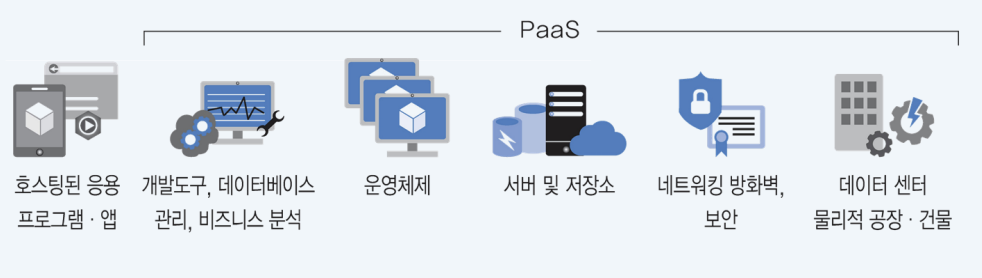
- 개발도구, 데이터베이스 관리, 비즈니스 분석
- 운영체제
- 서버 및 저장소
- 네트워킹 방화벽, 보안
- 데이터 센터 물리적 공장·건물
PaaS 주요 사례
-
기업이 독자적으로 소프트웨어를 개발하거나 서비스를 제공하기 위해 PaaS를 활용
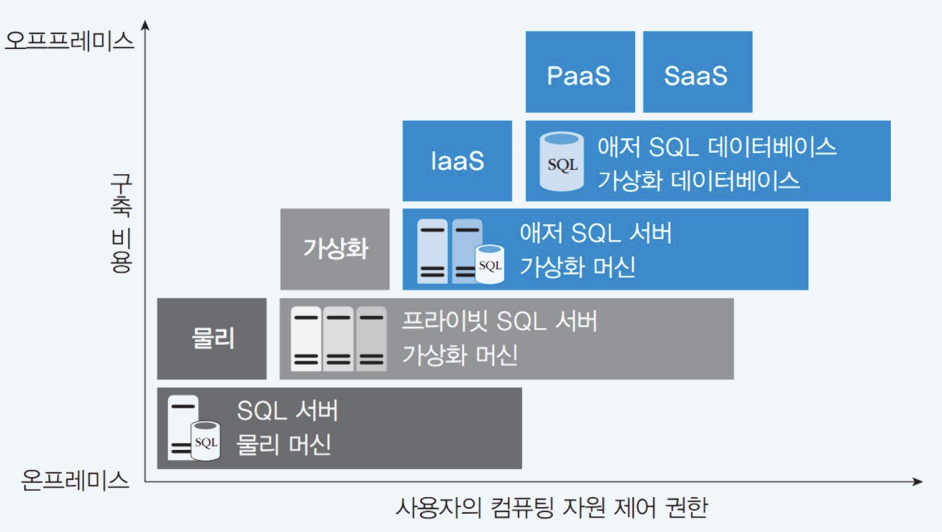
IaaS 모델
- 사용자가 요구한 IT 리소스를 가상화하여 제공하는 모델
- 운영하는 서비스에 요구되는 사항들을 상세히 명시
- 사용자가 인프라와 관련된 IT 리소스에 대하여 고수준의 제어 권한을 소유
-
IaaS의 서비스 영역
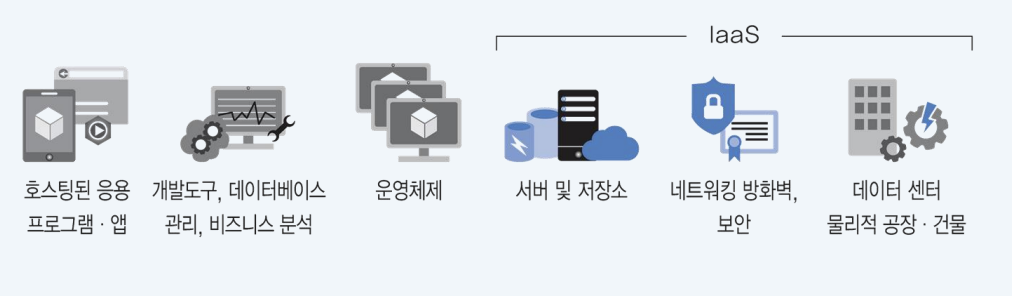
- 서버 및 저장소
- 네트워킹 방화벽, 보안
- 데이터 센터 물리적 공장, 건물
FaaS(Function as a Service) 모델
- 대규모 시스템을 구성하는 개별 기능, 비즈니스 로직, 혹은 함수를 클라우드에 등록하고 실행 시 요구되는 IT 리소스를 CSP 측에서 관리하는 모델
- 서버리스 컴퓨팅 기술의 기반
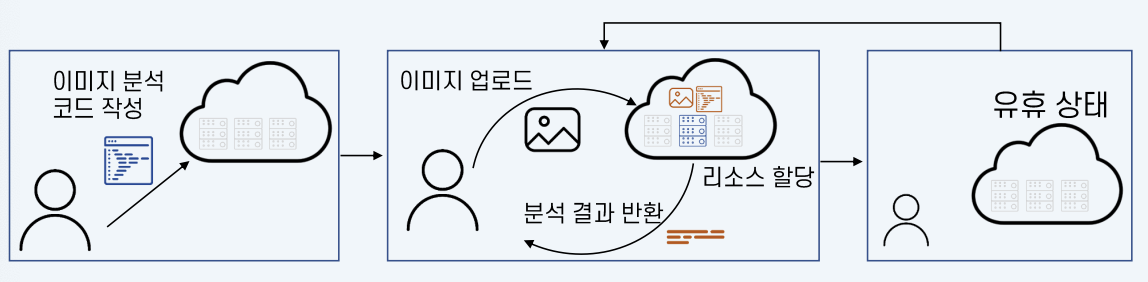
주요 FaaS
- MS Azure의 함수앱(Functions)
- AWS의 람다(lambda)
- Google의 클라우드 펑션(Cloud Functions)
CaaS(Container as a Service) 모델
- 사용자가 컨테이너 및 클러스터를 구동하기 위한 IT 리소스 및 기술을 제공
- 컨테이너
- 애플리케이션과 이를 구동하는데 요구되는 리소스(라이브러리, 바이너리, … etc)를 묶은 패키지
- 다양한 환경에서 오류 없이 사용이 가능
- 컨테이너
- 대표적인 CaaS의 서비스
- MS Azure의 AKS(Azure Kubernetes Service)
- AWS의 ECS(Elastic Container Service)
IaaS VS CaaS VS FaaS
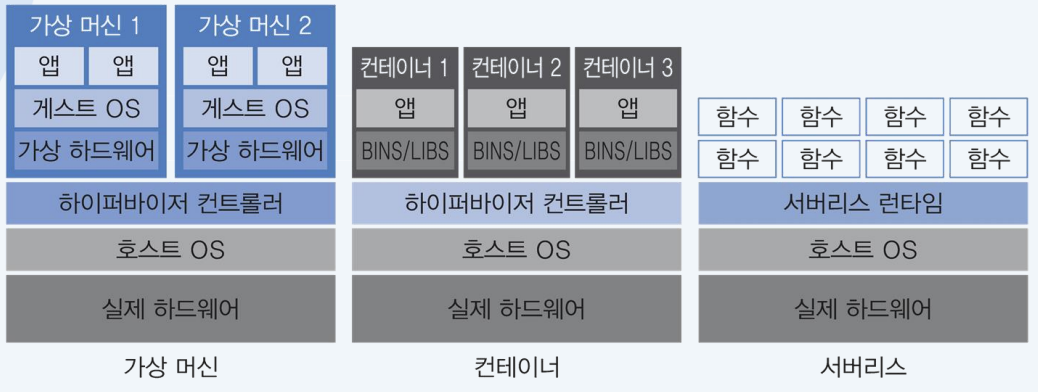
클라우드 배포 모델
클라우드 배포 모델의 이해
- 애플리케이션을 배포할 수 있는 클라우드 환경에 따른 분류
- NIST의 클라우드 배포 모델 분류
- Deployment Models
- Private cloud
- The cloud infrastructure is provisioned for exclusive use by a single organization comprising multiple consumers (e.g., business units).
- It may be owned, managed, and operated by the organization, a third party, or some combination of them, and it may exist on or off premises.
- Community cloud
- The cloud infrastructure is provisioned for exclusive use by a specific community of consumers from organizations that have shared concerns (e.g., mission, security requirements, policy, and compliance considerations).
- It may be owned, managed, and operated by one or more of the organizations in the community, a third party, or some combination of them, and it may exist on or off premises.
- Public cloud
- The cloud infrastructure is provisioned for open use by the general public.
- It may be owned, managed, and operated by a business, academic, or government organization, or some combination of them.
- It exists on the premises of the cloud provider.
- Hybrid cloud
- The cloud infrastructure is a composition of two or more distinct cloud infrastructures (private, community, or public) that remain unique entities, but are bound together by standardized or proprietary technology that enables data and application portability (e.g., cloud bursting for load balancing between clouds).
- Private cloud
퍼블릭 클라우드
-
CSP가 네트워크를 통하여 일반 사용자 및 기업(조직)이 이용할 수 있도록 컴퓨팅 리소스를 운영하는 모델
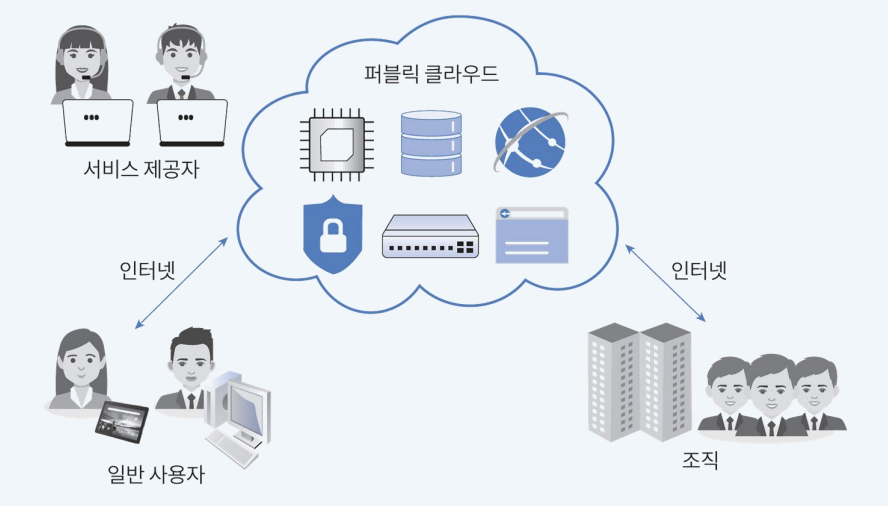
프라이빗 클라우드
- 하나의 기업이나 조직이 독립적으로 컴퓨팅 리소스를 점유하는 형태의 배포 모델
- 호스팅형
- CSP가 프라이빗 클라우드 구성하고 유지 보수하는 형태
- 관리형
- 사설 클라우드의 설정 및 관리를 CSP 측에서 제공해주는 형태
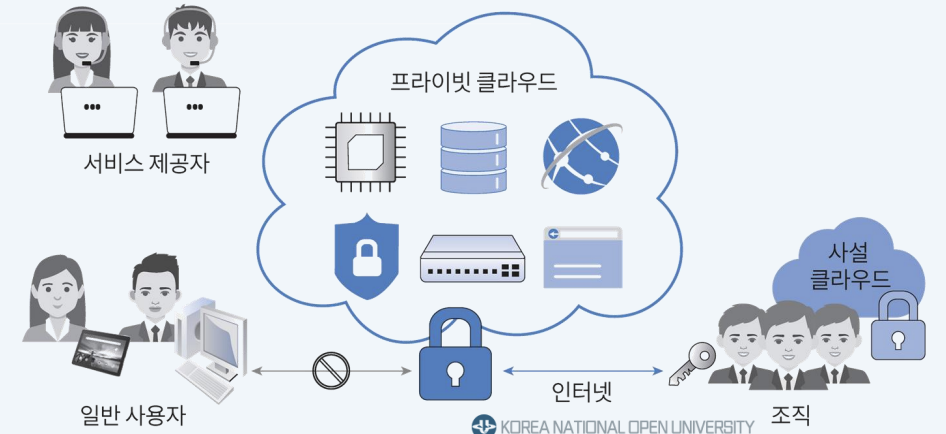
- 호스팅형
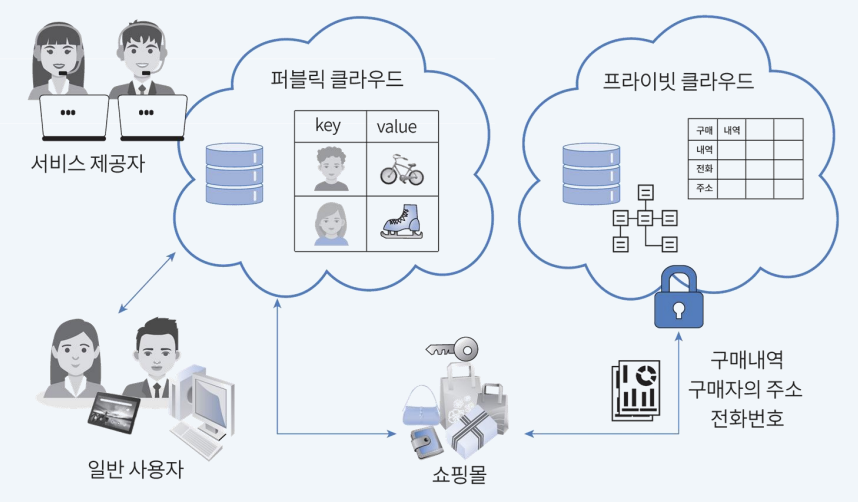
하이브리드 클라우드
-
퍼블릭 클라우드와 프라이빗 클라우드 혹은 온프레미스 환경을 결합한 모델
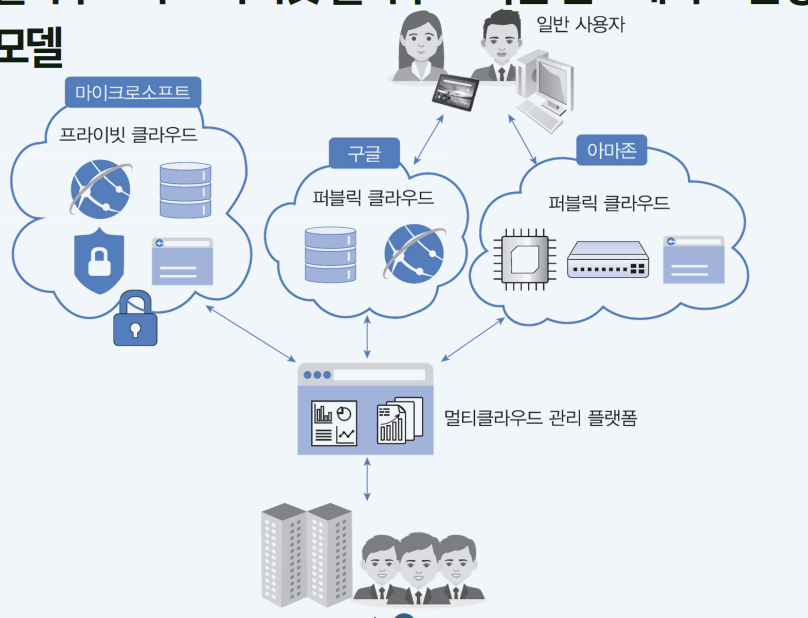
멀티 클라우드
-
퍼블릭 클라우드와 프라이빗 클라우드 혹은 온프레미스 환경을 결합한 모델
커뮤니티 클라우드
- 공통된 보안 요구사항이 있는 여러 기업 및 조직 내의 구성원들의 커뮤니티가 독점적으로 사용될 수 있도록 컴퓨팅 리소스를 관리하는 모델
연습 문제
-
지문의 그림은 클라우드 컴퓨팅의 어떤 서비스 모델인가?
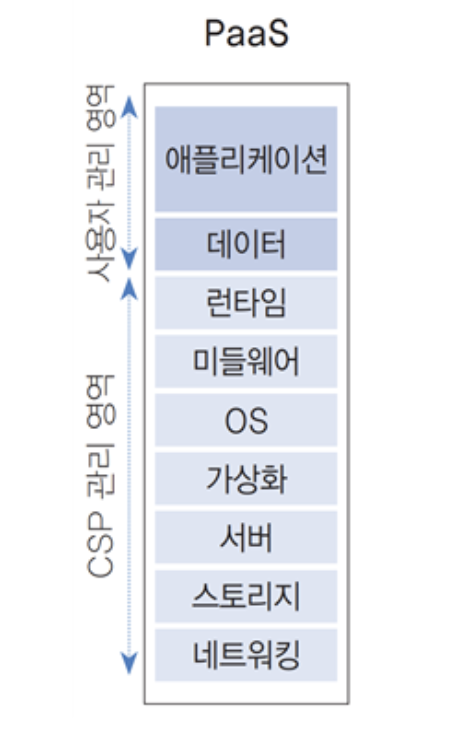
a. PaaS
- 클라우드 서비스 모델은 크게 IaaS, PaaS, SaaS, Serverless로 구분되며 문제의 그림은 PaaS를 나타냄
- PaaS는 프로그램을 실행할 수 있는 기반 환경(플랫폼)을 제공하는 서비스 모델로 서버, OS, 미들웨어 및 런타임까지 클라우드 서비스 제공자에 의해 관리되고 이 위에서 사용자가 개발한 애플리케이션을 사용하여 데이터를 처리하는 서비스 모델을 말함
-
지문의 그림과 같이 대규모 시스템을 구성하는 개발 기능, 비즈니스 로직, 혹은 함수를 클라우드에 등록하고 실행 시 요구되는 IT 리소스를 CSP 측에서 관리하는 클라우드 서비스 모델은?
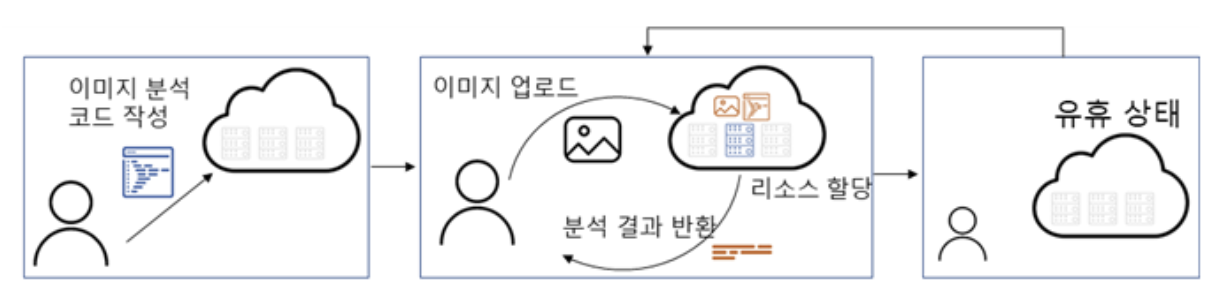
a. FaaS
- FaaS는 서버리스 컴퓨팅 기술의 기반이 되는 서비스 모델로 애플리케이션이 일부 작업에 의해 트리거될 때 실행되는 별도의 기능으로 분리되어 서버를 생성, 구성 또는 유지 관리 하지 않고도 애플리케이션 코드를 실행할 수 있는 환경을 제공함
-
여러 조직의 업무와 기능이 유사한 경우 파트너쉽을 맺고 연합된 조직이 공동으로 사용하는 클라우드 시스템 배포 모델은?
a. 커뮤니티 클라우드
- 클라우드 배포 모델은 퍼블릭, 프라이빗, 하이브리드, 커뮤니티 클라우드로 구분됨
- 커뮤니티 클라우드는 유사한 업무를 수행하는 기업과의 협약을 통해 많은 비용이 소요되는 프라이빗 클라우드 대신 협약을 맺은 기업이 리소스를 공유하여 퍼블릭 클라우드와 유사한 형태로 이용하는 모델을 말함
정리 하기
- 클라우드 서비스 모델은 CSP가 제공하는 IT 리소스의 수준에 따른 구분임
- 소프트웨어는 하드웨어, 운영체제, 라이브러리 및 런타임, 프레임워크 등의 기술이 결합되어 실행됨
- 클라우드 서비스 모델은 SaaS, PaaS, IaaS 및 FaaS, CaaS 등으로 구분됨
- 클라우드 배포 모델은 애플리케이션을 배포할 수 있는 클라우드 환경에 따른 분류임
- 클라우드 배포 모델에는 퍼블릭 클라우드, 프라이빗 클라우드, 하이브리드 클라우드, 멀티 클라우드 및 커뮤니티 클라우드 모델이 있음